DIAMETER
1.75 or 2.85 mm
Two standard sizes, and a printer takes only the one it was built for. Nearly all the printers in one university makerspace take 1.75 mm.
Why it matters doodlefilament
3D-PRINTER FILAMENT, EXPLAINED
What the numbers on a spool actually mean.
Compare the three plastics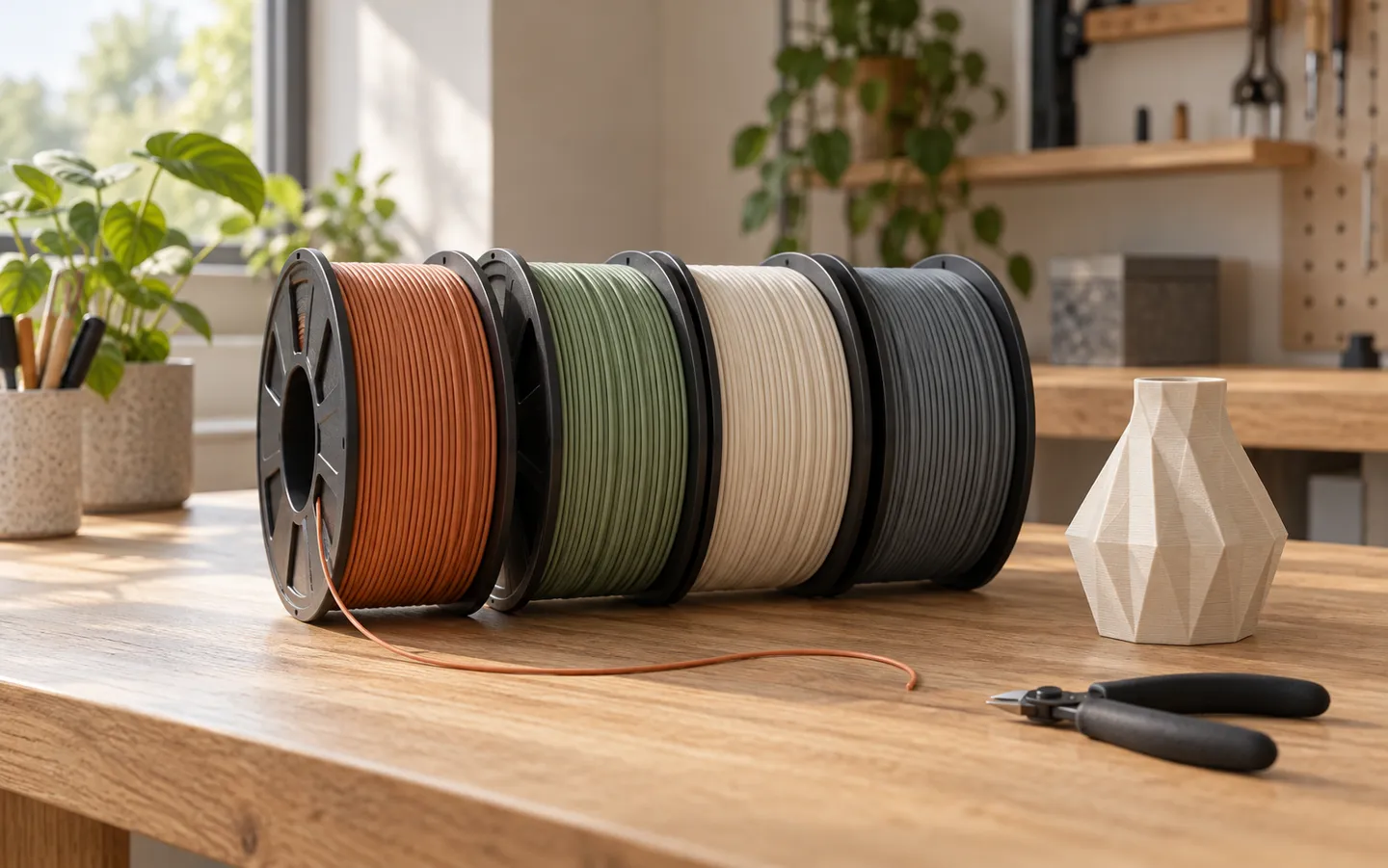
1.75 MMor 2.85?
Every spool carries a diameter, a material and a temperature range. Get them right and printing is easy; get them wrong and nothing sticks. Here is what university guides and published studies say, in plain English.
Plain English, with the sources linked.
At a glance
1% to 5.5%
Water in the filament, 72 hours later
Researchers at Georgia Southern University stored nylon filament at 40 °C and 80% humidity. After three days bubbles burst at the nozzle, the printed strands were badly damaged and the parts were weaker. They recommend drying damp filament and sealing unused spools.
NYLON · 2022
About 1 MPa
Strength lost per 0.1% of moisture
A study of ABS found that a 10% change in room humidity shifted the filament’s moisture by about 0.05%. Printed test pieces lost about 1 MPa of tensile strength for every 0.1% of moisture, and damp filament left a rougher surface.
ABS · 2023
TWO STUDIES WORTH KNOWING
Plastic filament takes up water from the air,
and the printer turns that water into steam.
Nylon is far thirstier than ABS, but the lesson is the same for every plastic: a spool left out in humid air is not the same material that left the factory.
A QUICK MATERIAL PICKER
Pick a filament to see its usual nozzle and bed temperatures and roughly how much heat a finished part can take. The ranges come from a university makerspace training guide.
Ranges are typical starting points. The label on your own spool may give a narrower range; go with that.
THE SHORT ANSWER
Diameter, material and temperature range
decide whether a print works.
DIAMETER
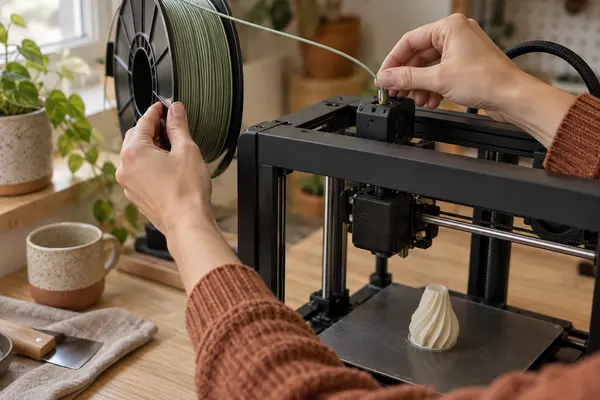
Two standard sizes, and a printer takes only the one it was built for. Nearly all the printers in one university makerspace take 1.75 mm.
Why it mattersMATERIAL
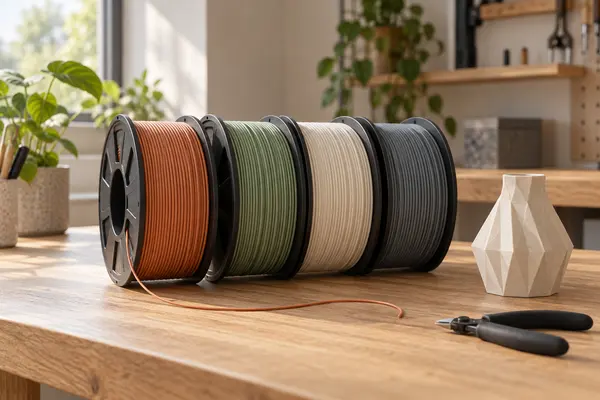
Each plastic melts, sticks and survives heat differently, from about 50 °C for PLA to about 100 °C for ABS.
Compare themMOISTURE
Filament soaks up water from the air, and damp filament bubbles at the nozzle and prints weaker parts.
See the studies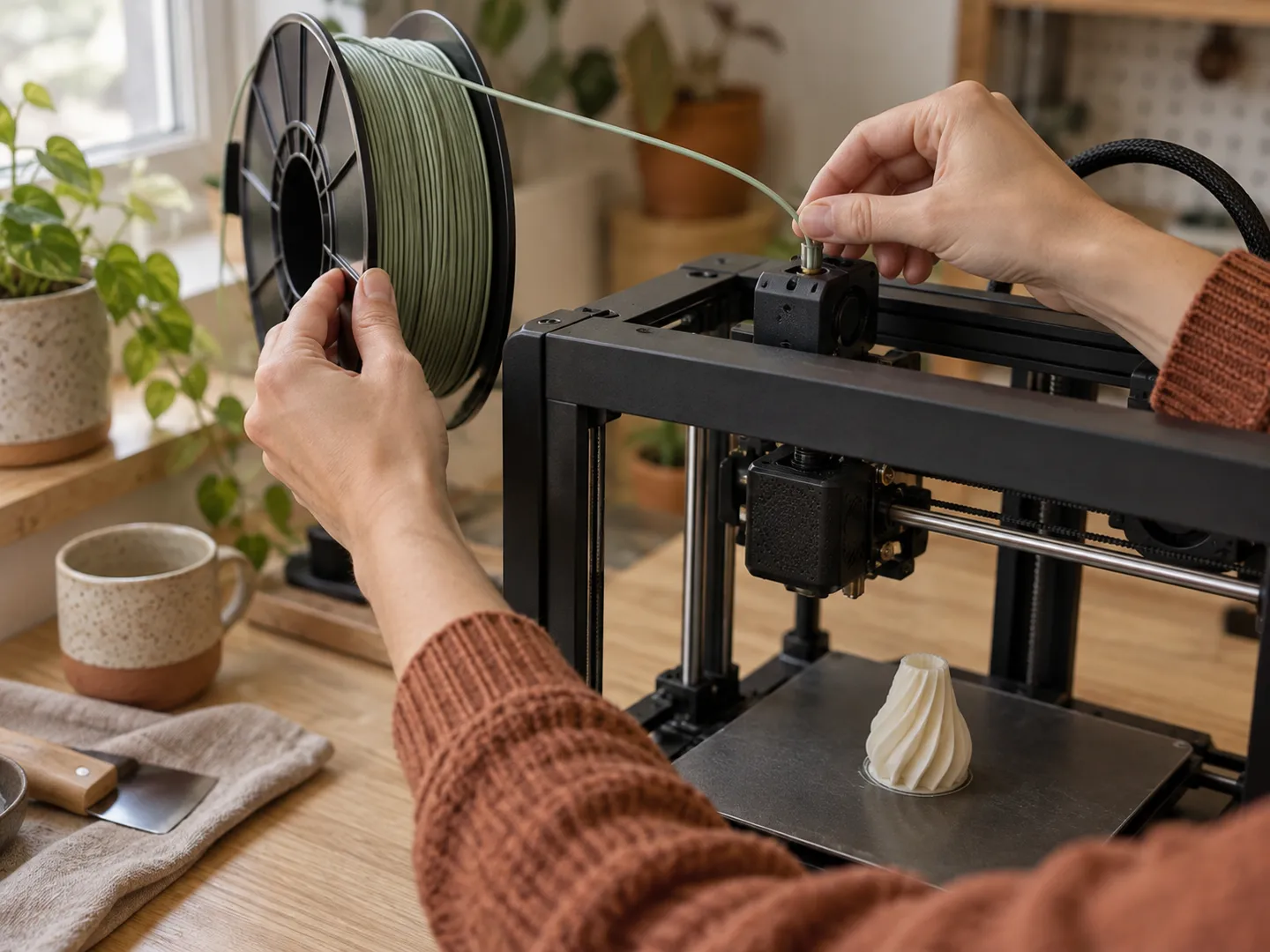
BEFORE YOU PRINT
Check the diameter on the spool against the printer’s specification before you buy. A 2.85 mm strand will not feed a 1.75 mm machine.
Begin at the lower end of the range printed on the spool. The Georgia Tech researchers suggested this to cut emissions too.
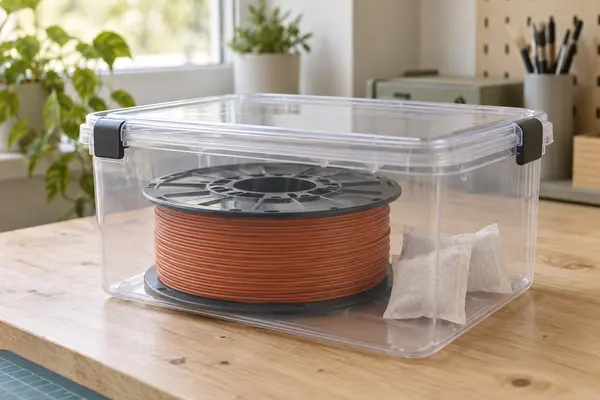
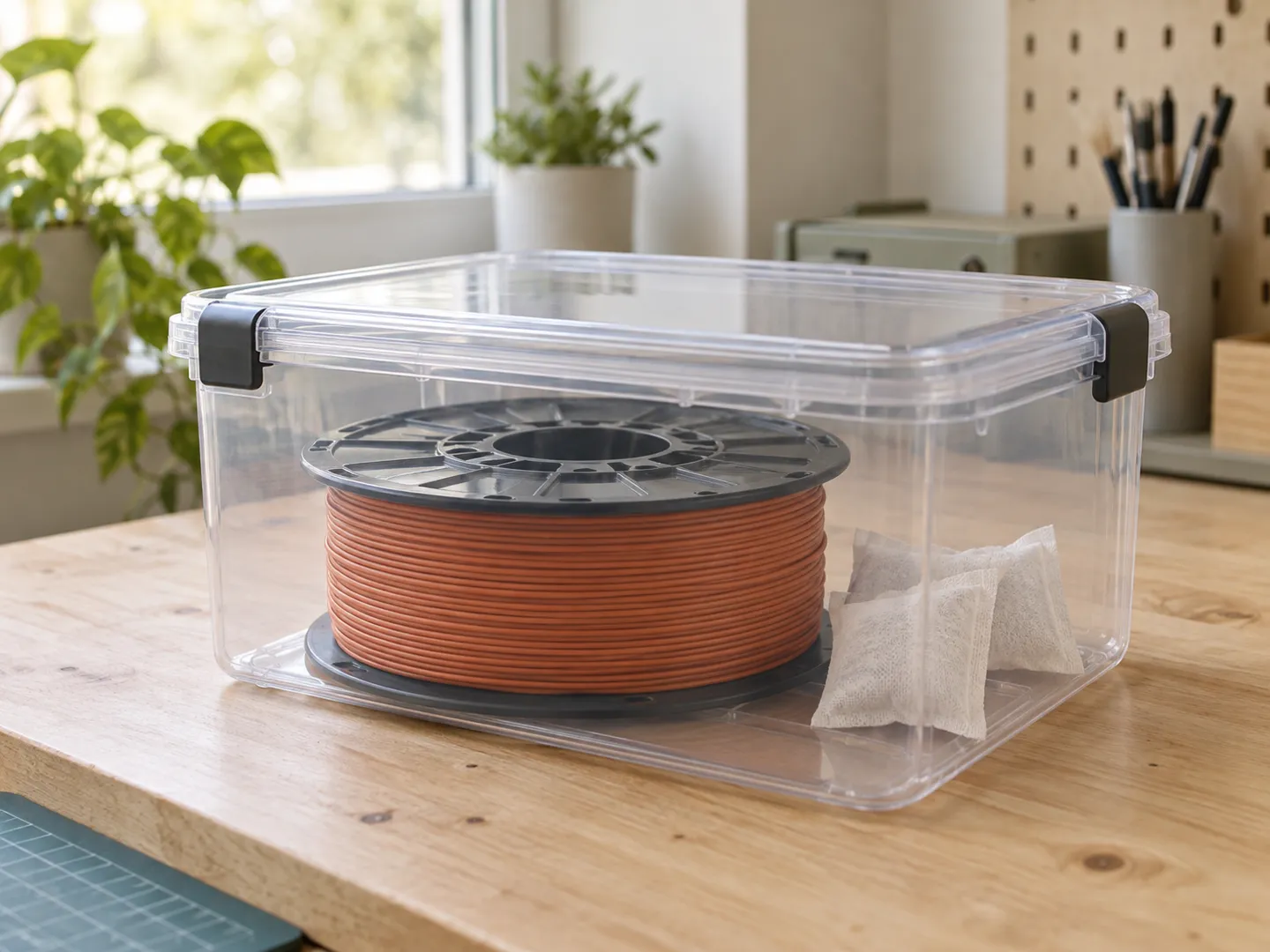
Keep unused filament in a sealed container. The 2022 study recommended vacuum-sealed storage and drying filament that has got damp.
Run the printer in a well-ventilated room, and pick the plastic for the heat the finished part must survive.
FILAMENT FACTS
A university makerspace lists 1.75 mm for nearly all of its printers and 2.85 mm only for its large-format machines, and asks people to match the size to the machine.
PLA is made from renewable resources, typically corn starch. A UK museum of plastics design notes it is intended to biodegrade, and that keeping it dry is crucial.
A university training guide gives PLA about 50 °C of heat resistance, PETG about 80 °C and ABS about 100 °C.
A 2019 Georgia Tech study found ABS, which needs a higher temperature to melt, gave off more emissions than PLA. The authors advise good ventilation.
The same guide lists an optional 20–60 °C bed for PLA but 80–110 °C for ABS, which warps and shrinks and is best printed in an enclosure.
QUICK QUESTIONS
Short answers to the questions people ask most.
Buy the diameter your printer is built for; the two are not interchangeable. At one university makerspace almost every printer takes 1.75 mm, and only its large-format machines take 2.85 mm. Makerspaces ask people to check the size against the machine before bringing their own spool.
PLA (polylactic acid) is a thermoplastic made from renewable resources, typically corn starch. A UK design museum’s plastics guide notes it is intended to biodegrade and that it is crucial to keep it dry.
A university training guide rates PLA and PETG as low difficulty and ABS as medium. ABS warps and shrinks and prints best in an enclosure, while PLA is the easiest but brittle and not heat resistant.
Plastic filament absorbs water from the air. In a 2022 study, nylon filament went from about 1% to about 5.5% water after 72 hours of humid storage, and bubbles bursting at the nozzle damaged the prints. A 2023 study of ABS found printed parts lost about 1 MPa of strength for every 0.1% of moisture.
Yes. A Georgia Tech study published in 2019 found that ABS, which needs a higher temperature, produced more emissions than PLA. The researchers advised running printers only in well-ventilated areas and using the lower end of a filament’s suggested nozzle temperature range.
Sources
A NAME WITH A LOT OF THREAD
doodlefilament.com is part of the DoodleSale portfolio. It isn't in an auction right now, but you can ask about leasing it.